Introduction
Kimono are decorated with beautiful flowers, birds, plants, and geometric designs.
These decorative elements are known as motifs, and they are much more than simple ornaments.
For centuries, Japanese people have used motifs to express wishes for happiness, longevity, prosperity, and good fortune.
Understanding these meanings allows us to appreciate kimono not only as clothing, but also as works of art filled with stories and symbolism.
In this article, we’ll explore some of the most common traditional kimono motifs and the meanings behind them.
What You’ll Learn
- What traditional kimono motifs are
- What kissho moyo (auspicious motifs) means
- The symbolism behind popular kimono designs
- How motifs make kimono even more meaningful
What Are Kimono Motifs?
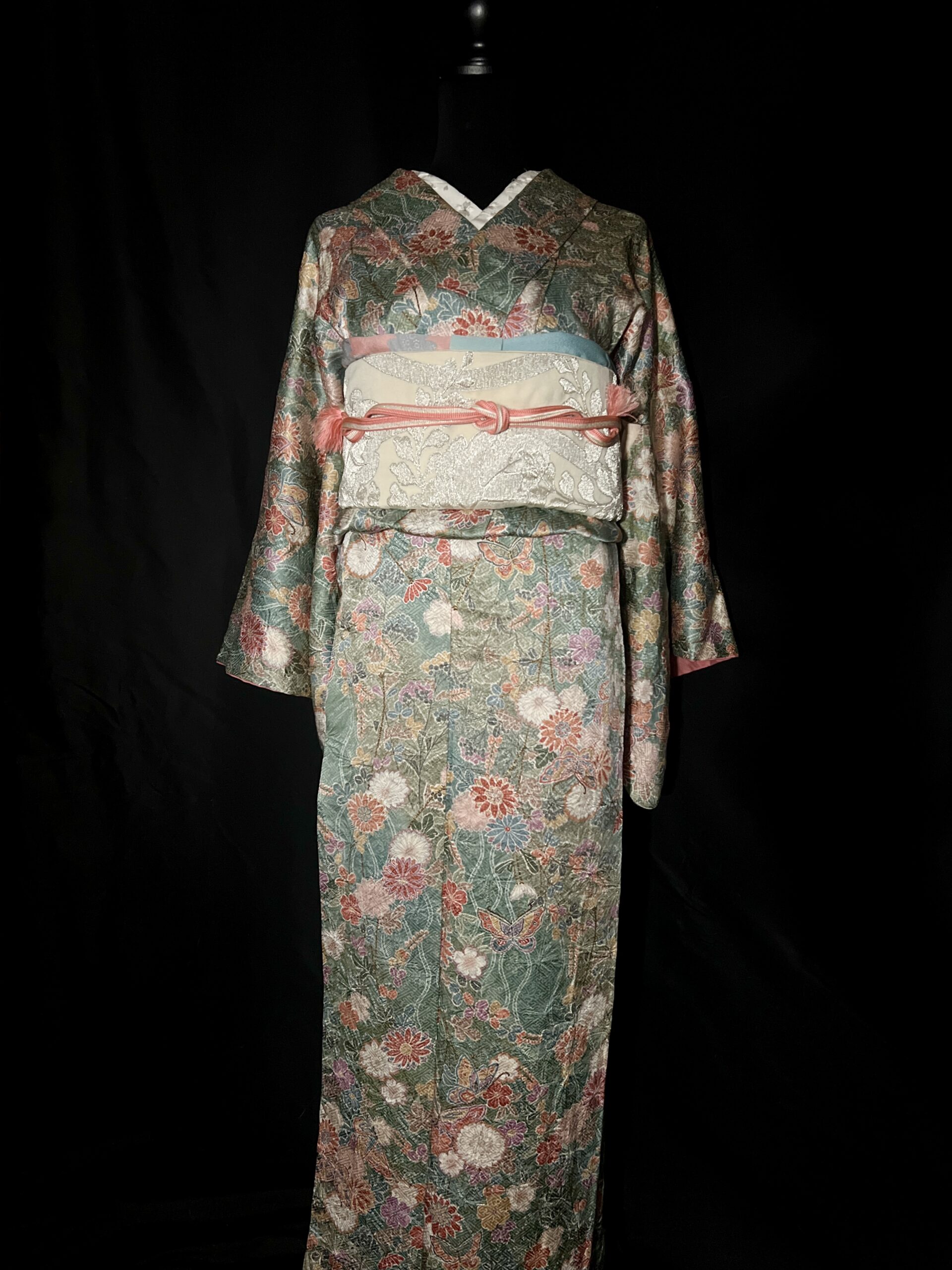
Kimono motifs are decorative designs woven, dyed, embroidered, or painted onto the fabric.
Many are inspired by nature, including flowers, birds, seasonal landscapes, and geometric patterns.
Rather than being purely decorative, these motifs often represent hopes, blessings, and important values in Japanese culture.
What Are Auspicious Motifs?
Many traditional kimono feature auspicious motifs, known in Japanese as kissho moyo (吉祥文様).
These symbols are believed to bring good fortune and are commonly found on formal kimono worn for celebrations such as weddings, coming-of-age ceremonies, and other special occasions.
Popular Kimono Motifs and Their Meanings
Cherry Blossoms (Sakura)
Cherry blossoms symbolize new beginnings, beauty, and the fleeting nature of life.
Because they bloom each spring, they also represent hope and renewal.
Cranes (Tsuru)
Cranes are one of Japan’s most beloved symbols of longevity and good fortune.
They are often seen on formal kimono worn during weddings and other celebrations.
Pine, Bamboo, and Plum (Sho-Chiku-Bai)
Together, pine, bamboo, and plum form one of Japan’s most famous auspicious motifs.
- Pine represents longevity.
- Bamboo symbolizes strength and resilience.
- Plum blossoms represent perseverance and the arrival of spring.
Butterflies (Cho)
Butterflies symbolize growth, transformation, and happiness.
Because they transform from caterpillars into butterflies, they are often associated with positive change and new beginnings.
They are also a popular motif found on many vintage kimono.
Seven Treasures (Shippo)
The Shippo pattern consists of overlapping circles that continue endlessly.
It symbolizes harmony, lasting relationships, and the connections between people.
Every Motif Tells a Story
Once you understand the meanings behind kimono motifs, every kimono becomes more fascinating.
Instead of simply seeing beautiful flowers or birds, you begin to recognize the wishes and traditions woven into each design.
A butterfly may represent transformation.
A crane may express a wish for a long and happy life.
These hidden meanings make kimono much more than beautiful garments.
Conclusion
Traditional kimono motifs reflect Japan’s deep appreciation for nature, the changing seasons, and the hopes people have shared for generations.
Whether featuring cherry blossoms, cranes, butterflies, or geometric designs, every motif tells its own story.
By learning their meanings, you can enjoy kimono with a deeper understanding of Japanese culture and craftsmanship.
Related Articles
- Kimono Symbolism: Butterfly and Hemp Leaf Pattern Meanings
- What Is an Obi? A Simple Guide to the Kimono Belt
- Kimono Fabrics: What Are Kimono Made Of?
- Can Anyone Wear a Kimono? A Simple Cultural Guide
- Kimono Seasonal Motifs: Cherry Blossoms and Maple Leaves Meaning
- Kimono Colors Meaning: What Do Colors Represent in Kimono?
- What Is Tsumugi?
Explore the Grandmother’s Kimono Archive
Learn more About alo
コメント