When you look at someone wearing a kimono, you may wonder:
“Is the kimono held together only by the obi?”
Western clothing often uses buttons, zippers, or other visible fasteners.
A kimono, however, appears to have almost none.
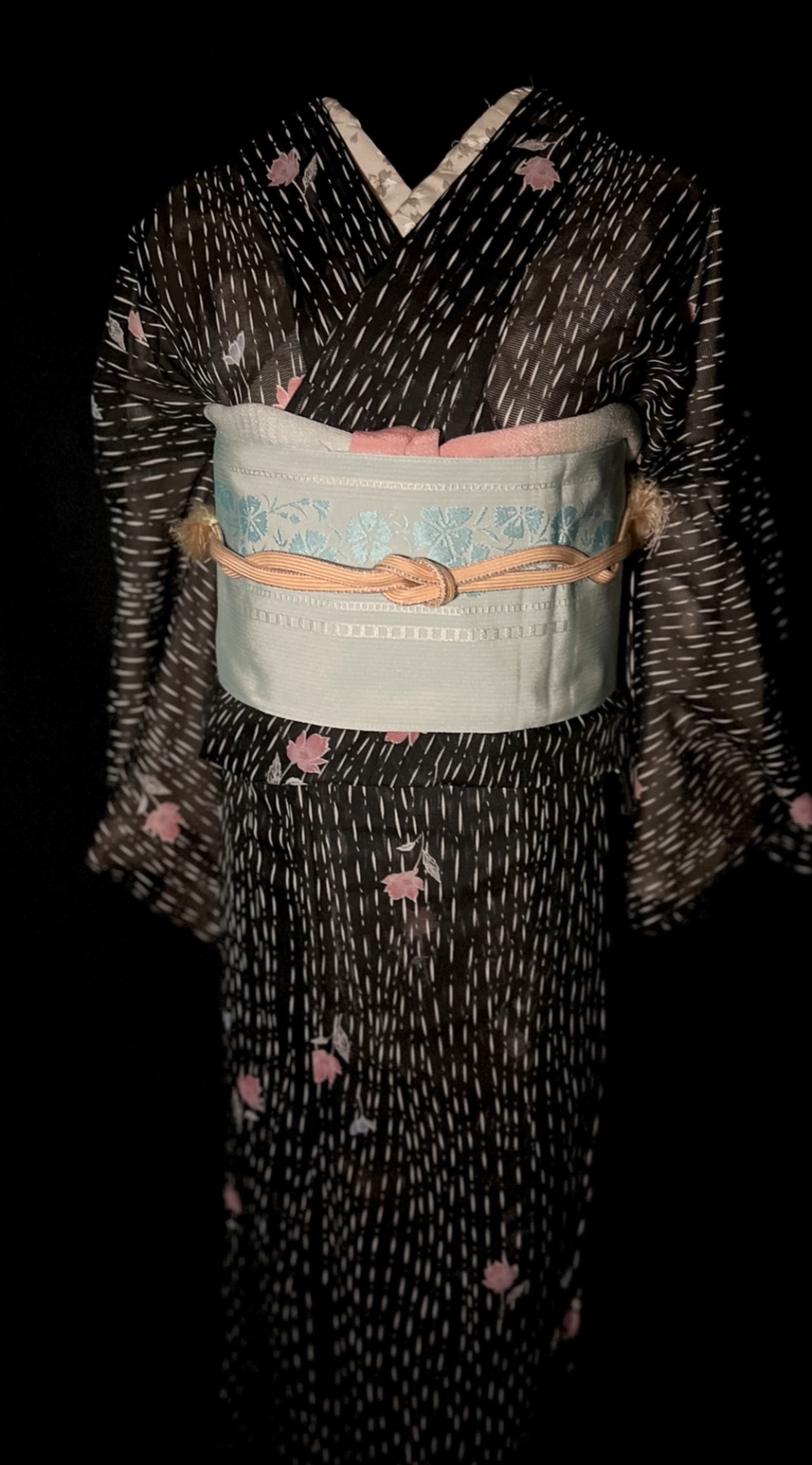
Because the obi is large and wrapped firmly around the body, it may seem as though the obi is the only thing keeping the kimono in place.
But this is not actually the case.
Underneath the obi are several hidden dressing accessories that help secure and shape the kimono.
Let’s take a closer look at the hidden structure behind kimono dressing.
Is a Kimono Held Together Only by an Obi?
The short answer is no.
A kimono is not usually held in place by the obi alone.
Depending on the dressing method, the wearer, and the type of kimono, several accessories may be used.
These can include:
- Koshi-himo
- Datejime
- Kimono dressing belts
These items help position the kimono and keep the collar and fabric in place before the obi is tied.
In other words, by the time the obi is added, much of the kimono has already been carefully arranged.
What Is Koshi-Himo?
Koshi-himo is a long, narrow tie used when dressing in kimono.
It helps hold the kimono in position against the body.
One of its important roles is helping adjust the length of the kimono.
Unlike many Western clothes, kimono are not simply worn according to standard sizes such as S, M, or L.
The garment is adjusted during dressing to suit the wearer’s height and body.
Koshi-himo helps hold these adjustments in place.
You usually cannot see it once the kimono is fully dressed.
Yet it plays an important role in supporting the final appearance.
What Is Datejime?
Datejime is a wider dressing accessory worn over a juban or kimono.
It helps support the areas that have already been carefully arranged, including the collar.
Because datejime is hidden underneath the obi, it is not visible in the finished kimono look.
However, it is one of the items that can help maintain a neat and balanced appearance.
Kimono dressing includes several tools like this.
They remain hidden, but quietly support the final shape.
Then What Is the Role of the Obi?
If the obi is not the only thing holding the kimono together, what does it do?
The obi does help support the overall dressed form.
However, it is much more than a simple belt or fastener.
The obi is also an important visual part of kimono styling.
Its color, pattern, material, and tying style can dramatically change the impression of a kimono.
The same kimono may look elegant, festive, calm, or seasonal depending on the obi paired with it.
For this reason, the obi has both a practical and an aesthetic role.
The Hidden Parts Support the Kimono
When we see a completed kimono outfit, our eyes naturally notice the kimono and obi.
But underneath them are koshi-himo, datejime, and other dressing accessories.
They are not meant to be seen.
Still, they help create the finished appearance.
This is one of the fascinating aspects of kimono dressing.
The kimono is wrapped around the body.
The collar is arranged.
The length is adjusted.
The fabric is carefully positioned.
Finally, the obi is added.
A complete kimono look is created through a series of small adjustments and layers.
Kimono Is Not Held Together by the Obi Alone
A kimono is not simply held together by its obi.
Hidden underneath are dressing accessories such as koshi-himo and datejime that help keep the kimono arranged.
The obi then supports the overall appearance while becoming one of the most visually important parts of the outfit.
Many of the structures that support kimono dressing cannot be seen from the outside.
And perhaps that is part of what makes kimono so fascinating.
At alo, I share simple explanations of kimono questions that may feel ordinary in Japan but are often surprisingly interesting when viewed from outside Japanese culture.
Related Articles
- Kimono Symbolism: Butterfly and Hemp Leaf Pattern Meanings
- What Is an Obi? A Simple Guide to the Kimono Belt
- Kimono Fabrics: What Are Kimono Made Of?
- Can Anyone Wear a Kimono? A Simple Cultural Guide
- Kimono Seasonal Motifs: Cherry Blossoms and Maple Leaves Meaning
- Kimono Colors Meaning: What Do Colors Represent in Kimono?
- What Is Tsumugi?
Explore the Grandmother’s Kimono Archive
Learn more About alo
コメント