Introduction
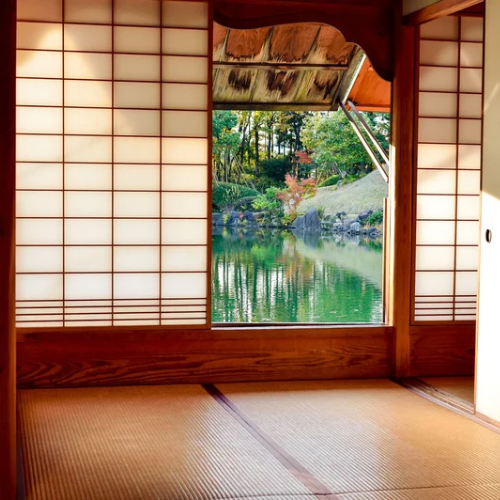
Color carries meaning in kimono.
In Japan, kimono colors are not chosen only for beauty.
They often reflect season, atmosphere, formality, and cultural symbolism.
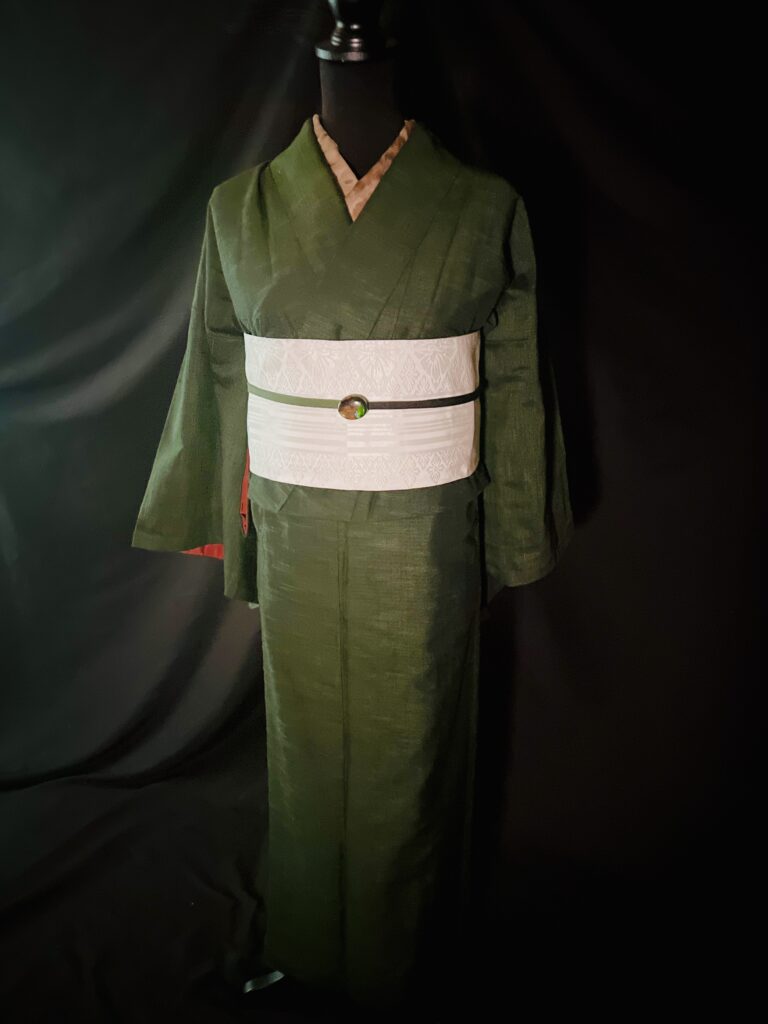
Among them, green is a color of quiet strength.
It feels natural, balanced, and refined.
In this article, I will explain what green means in kimono culture, why it feels so elegant, and how it appears in my grandmother’s kimono archive.
What Does Green Symbolize in Japan?
In Japanese aesthetics, green is often connected with:
- nature
- growth
- harmony
- freshness
- calm balance
It can suggest leaves, trees, new life, and a peaceful connection with the natural world.
Green is not usually the loudest color in kimono.
Instead, it creates a softer and more composed impression.
That is why green often feels graceful rather than dramatic.
Green in Kimono Culture
Green in kimono can express different moods depending on the shade.
For example:
- deep green can feel mature, grounded, and elegant
- soft green can feel fresh, gentle, and seasonal
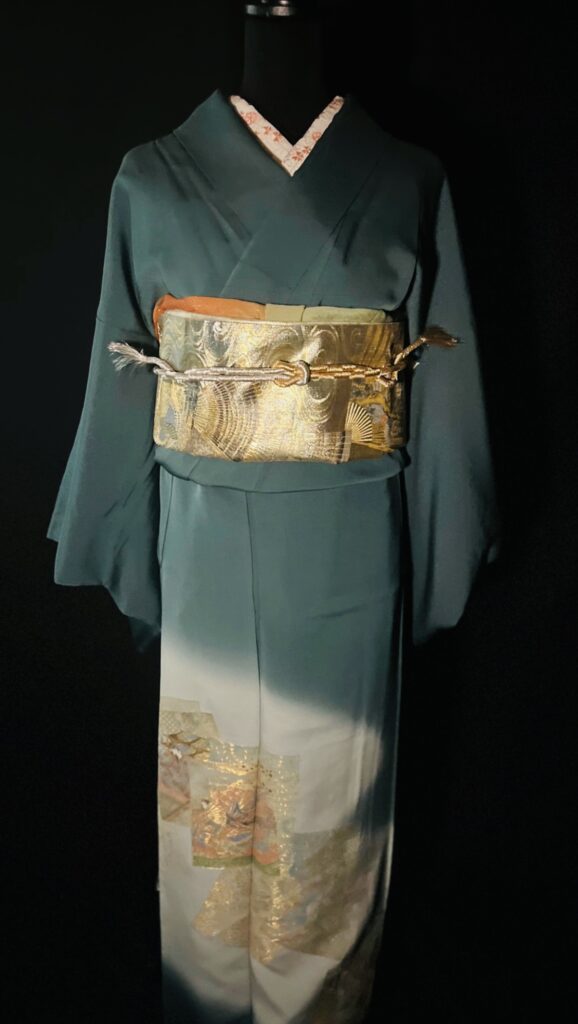
- blue-green tones can feel cool, refined, and modern
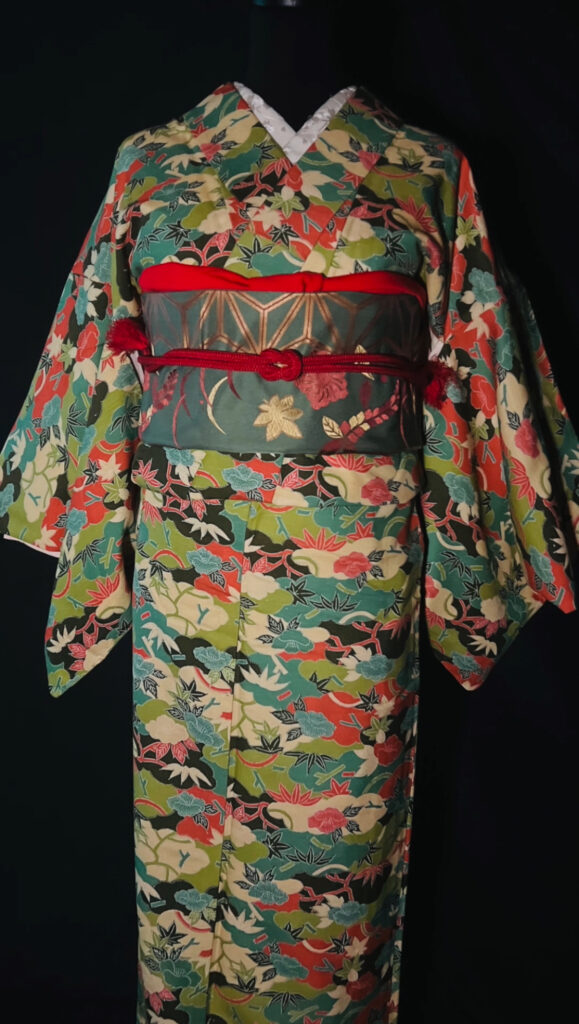
Green is especially beautiful when it appears with seasonal motifs, soft gradations, or woven texture.
It works well in kimono because it carries presence without becoming too aggressive.
Why Green Feels Elegant
One reason green feels elegant in kimono is its balance.
It is more expressive than grey, but calmer than red.
It is more natural than gold, but still full of visual richness.
Green can quietly support pattern, embroidery, or textile texture without overwhelming the whole piece.
This makes it a color of quiet elegance.
In many cases, green does not demand attention.
It invites careful looking.
Green and the Seasons
Green is also deeply connected to seasonality.
In kimono culture, color often carries seasonal feeling.
Green may suggest:
- fresh leaves in spring
- rich plants in early summer
- shaded gardens in warmer months
- harmony with floral or nature motifs
Because kimono is closely tied to season and atmosphere, green often feels alive rather than static.
Green in My Grandmother’s Kimono Archive
In my grandmother’s kimono collection, green appears often.
That feels meaningful to me.
Her collection includes many pieces with refined beauty, strong technique, and quiet presence.
Green fits that world naturally.
Rather than looking flashy, it feels settled, graceful, and lasting.
To me, green in kimono expresses a kind of beauty that does not need to be loud.
It stays.
If you would like to explore more, you can also visit my grandmother’s kimono archive.
Green as a Cultural Color
In kimono, green is not just a decorative choice.
It can hold cultural meaning through atmosphere, season, and emotional tone.
That is one of the reasons kimono remains so fascinating.
A single color can carry memory, restraint, and beauty all at once.
Green is a good example of that.
It reminds us that elegance in Japanese culture is often quiet.
Conclusion
Green in kimono symbolizes nature, balance, freshness, and quiet elegance.
It is a color that feels refined without being severe, and expressive without being loud.
In my grandmother’s archive, green appears as part of a larger beauty:
a beauty shaped by technique, presence, and cultural memory.
If you would like to explore the wider symbolism of kimono colors, you can also read my guide to kimono color meanings.
Next Reading
- What Does Pink Mean in Kimono?
- What Does Purple Mean in Kimono?
- What Does Black Mean in Kimono?
- What Does Gold Mean in Kimono?
- What Does Indigo Blue Mean in Kimono?
- What Does White Mean in Kimono?
- What Does Orange Mean in Kimono?
Discover the meaning of kimono colors in Japanese culture—from white and black to pink, indigo, gold, and more—each carrying its own symbolism.
alo also creates kimono-inspired dachshund apparel connected to Japanese culture, family stories, and quiet everyday style.
Featured design inspired by traditional Japanese kimono elegance
A design that blends Japanese tradition with a modern, playful spirit.
Explore
Explore real kimono from my grandmother’s collection:
→ Grandmother’s Kimono Archive
Learn more about alo:
→ About alo
コメント