Introduction
Kimono are often admired for their beautiful patterns.
Flowers, animals, and natural scenes appear in many designs.
But these patterns are not only decorative.
Many traditional kimono motifs carry symbolic meanings connected to nature, good fortune, and cultural values.
This guide introduces some of the most popular kimono patterns and what they represent.
What You’ll Learn in This Article
- Why kimono patterns often have symbolic meanings
- Some of the most common motifs in kimono
- Cultural meanings behind traditional designs
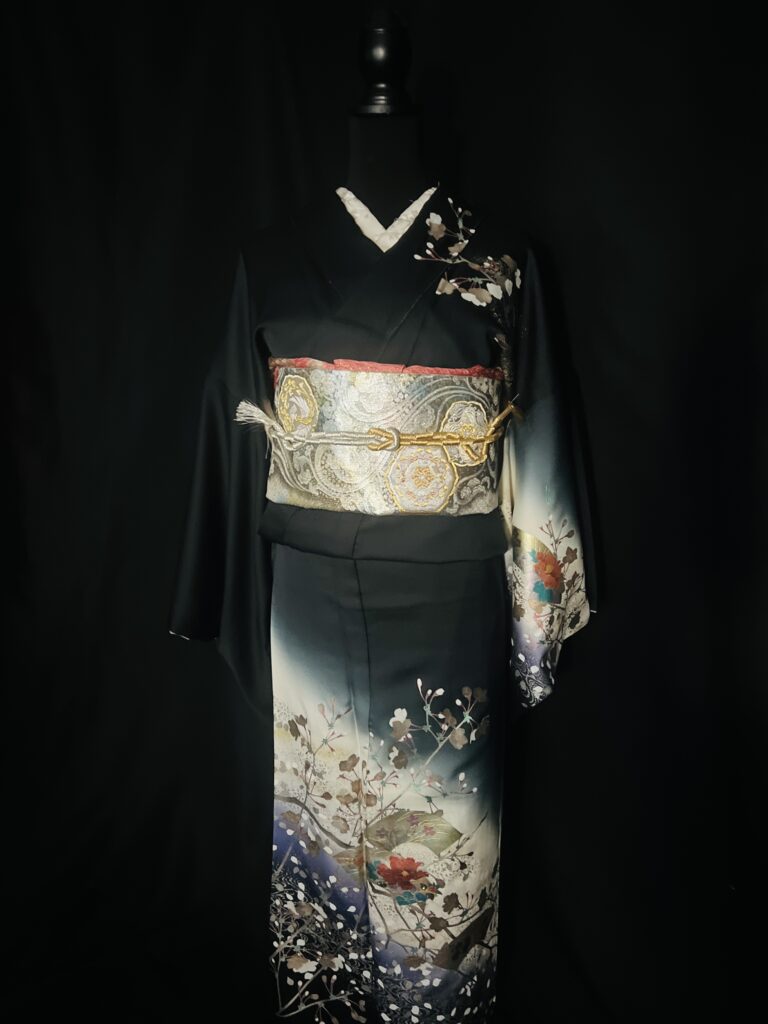
Sakura (Cherry Blossoms)
Cherry blossoms are one of the most recognizable symbols of Japan.
They represent:
- new beginnings
- the beauty of fleeting moments
- the arrival of spring
Although strongly associated with spring, sakura can also symbolize fresh starts and life transitions, which is why the motif sometimes appears beyond strictly seasonal contexts.
Crane (Tsuru)
The crane is a powerful symbol in Japanese culture.
It often represents:
- longevity
- good fortune
- happiness in marriage
Because cranes are believed to live for a thousand years in folklore, they appear frequently in formal kimono designs.
Pine (Matsu)
Pine trees stay green even during winter.
Because of this, they symbolize:
- endurance
- prosperity
- long life
Pine motifs are commonly used in celebratory designs.
Chrysanthemum (Kiku)
The chrysanthemum is associated with elegance and nobility.
It also has historical significance, as the chrysanthemum is connected with the Japanese imperial family.
Symbolically it represents:
- refinement
- longevity
- dignity
Maple Leaves (Momiji)
Maple leaves are often connected with autumn.
They represent:
- seasonal beauty
- the appreciation of nature
- the quiet elegance of change
These motifs reflect Japan’s sensitivity to seasonal landscapes.
Flowing Water (Ryūsui)
Flowing water patterns symbolize movement and purity.
They can also represent:
- continuity
- calmness
- the passage of time
Because water is timeless, this motif is sometimes used across multiple seasons.
A Personal Note
Traditional kimono patterns often reflect the relationship between people and nature.
Some of the kimono I inherited from my grandmother also feature motifs like these, reminding me how deeply cultural meaning can be woven into clothing.
Conclusion
Kimono patterns are more than decoration.
They often express wishes for happiness, longevity, and harmony with nature.
Understanding these motifs helps us appreciate kimono not only as garments, but also as cultural expressions.
Related Articles
- Kimono Symbolism: Butterfly and Hemp Leaf Pattern Meanings
- What Is an Obi? A Simple Guide to the Kimono Belt
- Kimono Fabrics: What Are Kimono Made Of?
- Can Anyone Wear a Kimono? A Simple Cultural Guide
- Kimono Seasonal Motifs: Cherry Blossoms and Maple Leaves Meaning
- Kimono Colors Meaning: What Do Colors Represent in Kimono?
Explore the Grandmother’s Kimono Archive
Learn more About alo

コメント