Introduction
Different kimono fabrics create completely different impressions.
In a previous article, we explored tsumugi kimono,
known for its crisp structure and stylish sharpness.
Dyed silk kimono, however, offer another kind of beauty—
softness, flowing lines, and quiet elegance.
In this article, we’ll explore the charm of dyed silk kimono.
What You’ll Learn
- What dyed silk kimono is
- The difference between tsumugi and dyed kimono
- The beauty of soft silhouettes
- Why dyed kimono feels elegant
What Is Dyed Silk Kimono?
Dyed kimono are created by dyeing patterns and colors onto woven white fabric.
Common examples include:
- Komon
- Houmongi
- Tsukesage
Unlike tsumugi, which expresses patterns through weaving,
dyed kimono creates beauty through color and flowing surface design.
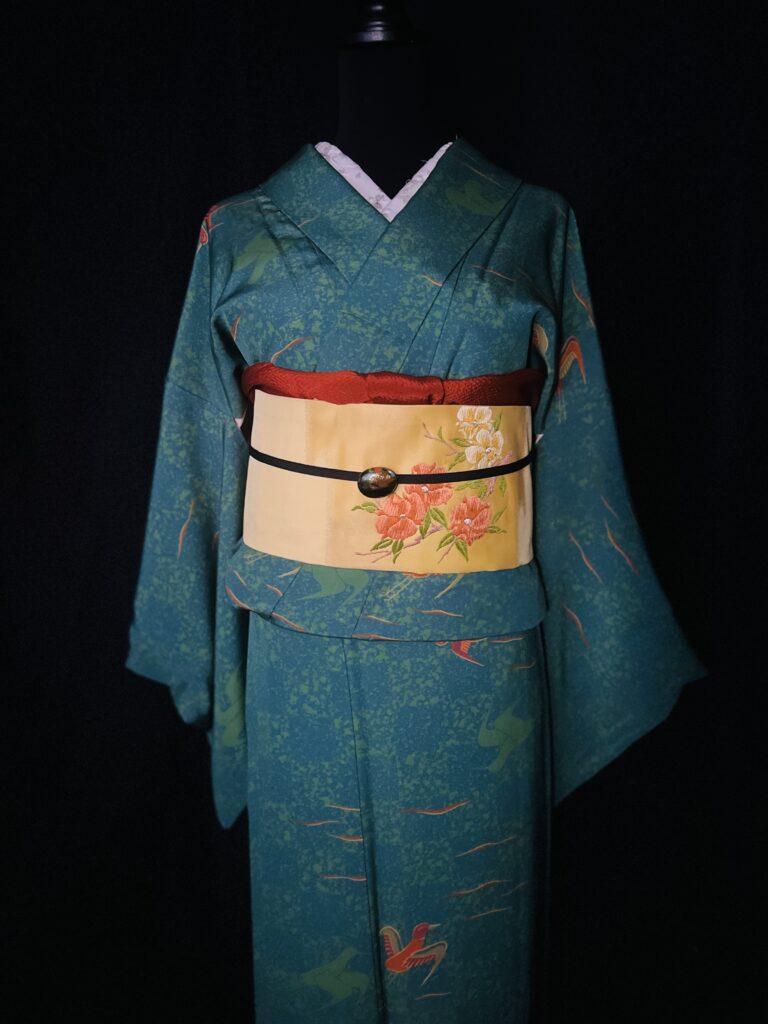
Soft Curves That Follow the Body
Dyed silk kimono differs from the structured feel of tsumugi.
The fabric is softer and drapes naturally along the body,
creating smooth and flowing lines when worn.
As the wearer moves,
the kimono gently follows those movements.
Its beauty lies in its flowing silhouette.
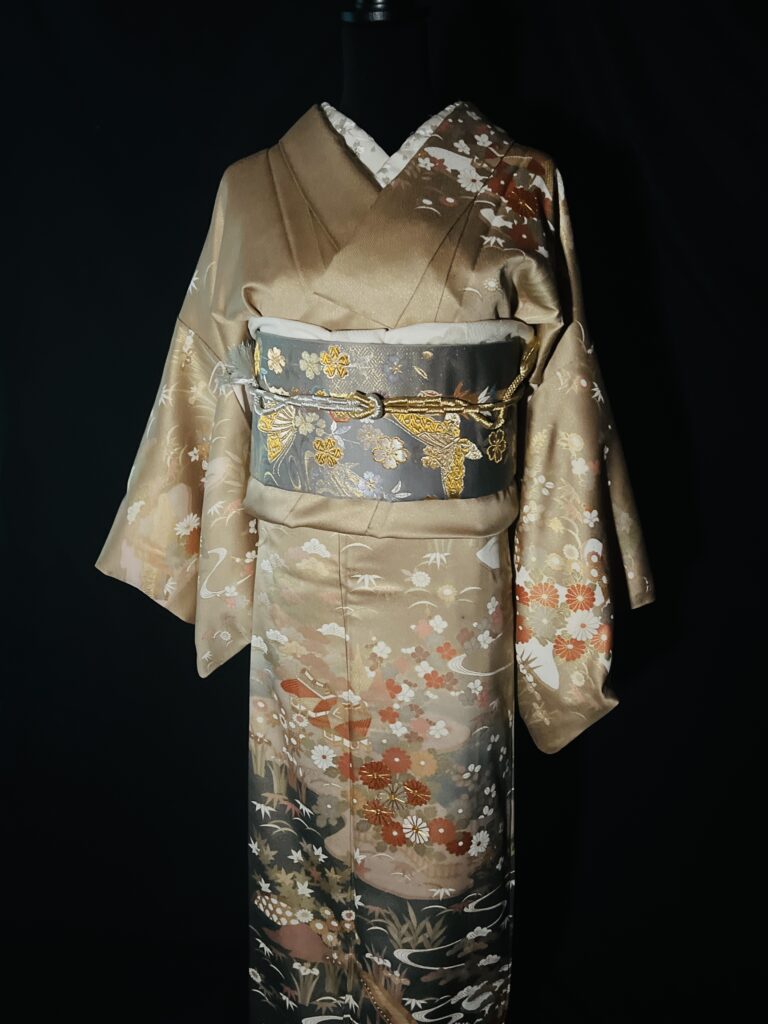
Why It Feels So Elegant
The softness and drape of silk naturally create:
- Elegance
- Quiet sophistication
- Flowing beauty
It does not need to be loud or flashy.
Instead,
it leaves a calm and lasting impression.
That subtle beauty is one of the greatest charms of dyed kimono.
Why Formal Kimono Often Uses Dyed Silk
Many formal kimono styles, such as houmongi and tsukesage,
are dyed kimono.
One reason is the graceful movement created by soft silk fabric.
The beauty appears not only when standing still,
but also while walking and moving naturally.
The Difference Between Tsumugi and Dyed Kimono
Tsumugi is known for:
- Firm texture
- Sharp silhouette
- Chic and stylish atmosphere
Dyed silk kimono, on the other hand, is loved for:
- Soft curves
- Smooth drape
- Elegant flow
Neither is better than the other.
They simply express different kinds of beauty.
Quiet Beauty Without Excess
Dyed kimono does not rely on loud beauty.
Its charm comes from:
- Soft fabric
- Flowing movement
- Natural lines along the body
There is a quiet refinement within that softness.
It may reflect a uniquely Japanese sense of beauty.
Conclusion
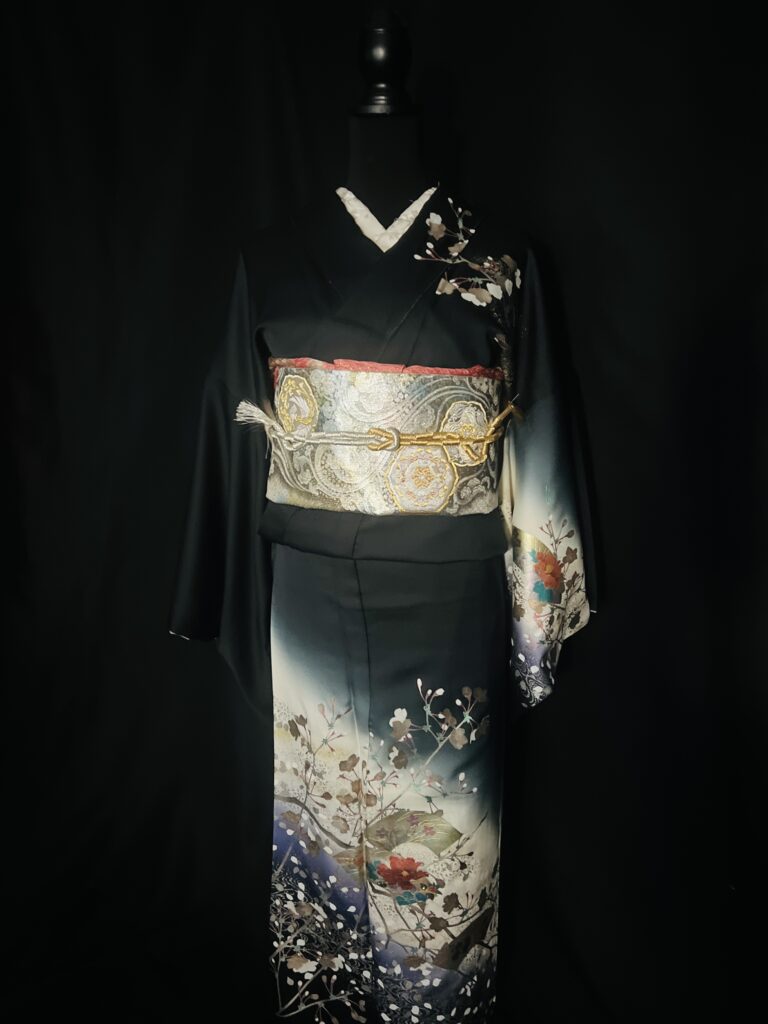
Dyed silk kimono offers a soft and flowing elegance.
Unlike the crisp beauty of tsumugi,
its charm lies in graceful movement and quiet sophistication.
That timeless beauty
is why dyed kimono continues to be loved today.
Related Articles
- Kimono Symbolism: Butterfly and Hemp Leaf Pattern Meanings
- What Is an Obi? A Simple Guide to the Kimono Belt
- Kimono Fabrics: What Are Kimono Made Of?
- Can Anyone Wear a Kimono? A Simple Cultural Guide
- Kimono Seasonal Motifs: Cherry Blossoms and Maple Leaves Meaning
- Kimono Colors Meaning: What Do Colors Represent in Kimono?
- What Is Tsumugi?
Explore the Grandmother’s Kimono Archive
Learn more About alo
コメント