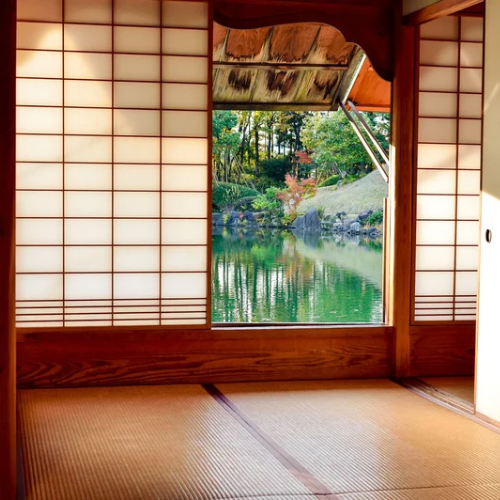
When you see many kimono displayed together, you may wonder:
“Why do they all seem to have the same shape?”
The colors are different.
The patterns are different.
The fabrics may also be different.
Yet the basic shape of the garments often looks remarkably similar.
A long body.
Sleeves extending from both sides.
A straight collar.
Unlike Western clothing, where dresses, jackets, shirts, and coats can have very different silhouettes, kimono often appear to share the same basic form.
So why do kimono have such a simple shape?
Let’s look at the basic structure of kimono and the differences hidden within it.
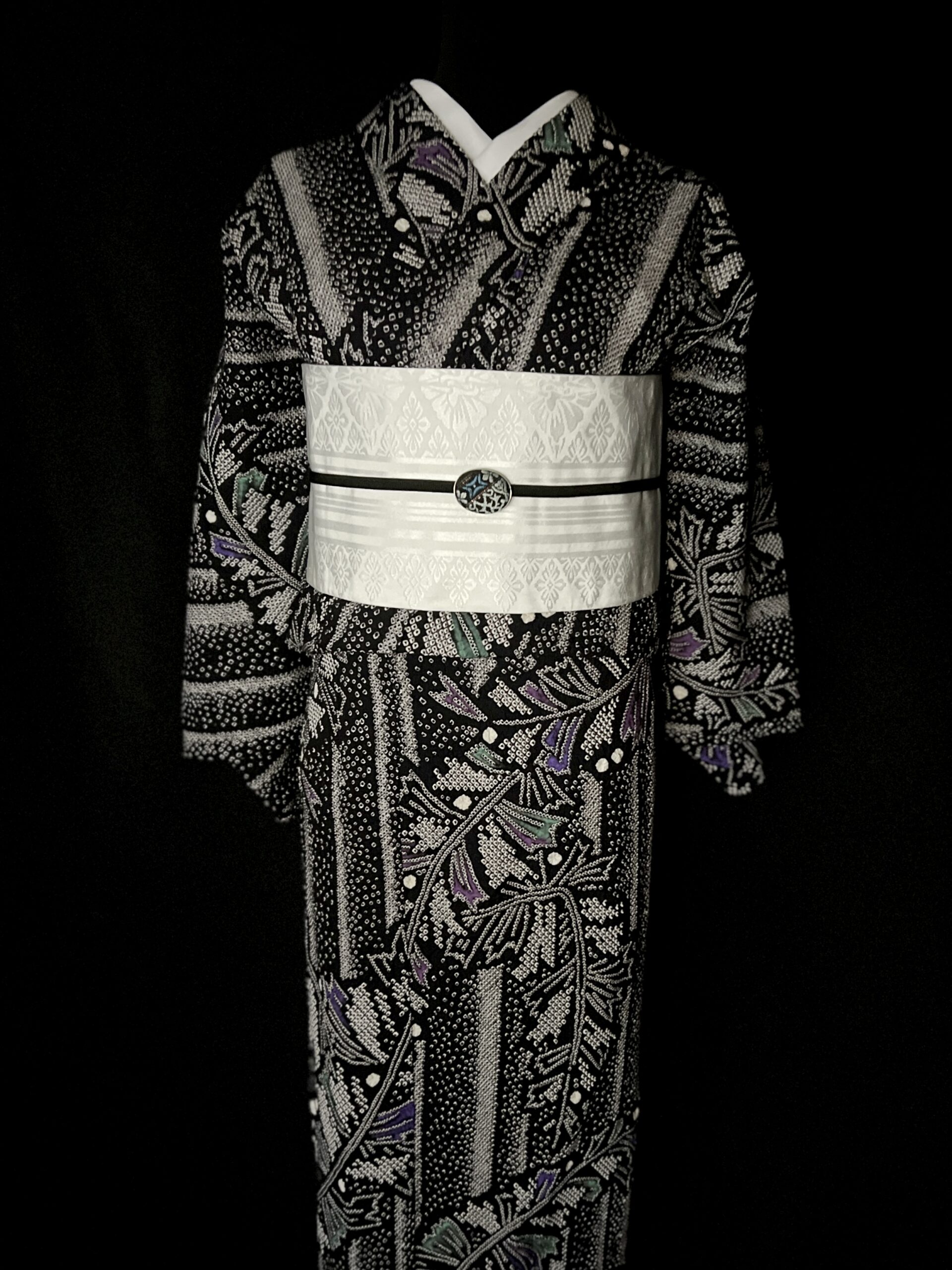
Kimono Share a Basic Structure
Kimono are built from several main sections.
These include the body panels, sleeves, collar, and okumi front panels.
These sections are combined to create the basic kimono form.
Kimono have a relatively straight and flat construction.
Because of this, many kimono look very similar when they are laid flat or displayed on a hanger.
This simple structure is one of the distinctive features of kimono.
Kimono and Western Clothing Use Shape Differently
Modern Western clothing can have many different silhouettes.
Some garments follow the curves of the body.
Some emphasize the waist.
Others create shape around the shoulders or hips.
The garment itself is often cut and sewn to create a specific three-dimensional silhouette.
Kimono work differently.
Their construction is relatively flat and straight.
When hanging on a hanger, a kimono may look extremely simple.
However, the final silhouette is created during dressing.
The collar is arranged.
The front panels are overlapped.
The length is adjusted.
The obi is added.
Through dressing, a flat garment becomes a complete kimono look.
Similar Shapes Do Not Mean Identical Sizes
Although kimono may look similar in shape, they are not all the same size.
Kimono have several important measurements.
These include garment length, sleeve-to-sleeve length, sleeve length, and body width.
Many traditionally tailored kimono were made according to the measurements of the intended wearer.
Because of this, two kimono may appear almost identical when viewed from a distance but have different lengths and widths when compared closely.
Kimono are not simply “one size fits all.”
Individual measurements exist within the simple basic structure.
Fabric Can Completely Change the Impression
The material of a kimono can greatly affect its appearance.
Kimono may be made from silk, cotton, hemp, wool, or modern materials such as polyester.
Even when the basic garment shape is similar, the fabric changes the way the kimono looks and feels.
Some fabrics have a soft shine.
Others appear natural and textured.
Some feel light and airy.
The way the fabric falls around the body can also change.
Because the basic shape is simple, differences in material can become especially noticeable.
Pattern Placement Creates Different Kimono Designs
Color and pattern are often the first things people notice about a kimono.
But where the pattern is placed is also important.
Some kimono have patterns spread across the entire garment.
Others concentrate decoration around the hem.
Some designs are carefully arranged so that patterns continue across seams.
Even when the garment shape is similar, pattern placement can change the impression and sometimes relate to the type of kimono.
Kimono patterns are not simply decorations placed randomly on fabric.
The location of a design can be part of how the garment is understood and appreciated.
Kimono Can Also Be Tailored Differently
There are differences in kimono construction depending on season and purpose.
Awase kimono have a lining.
Hitoe kimono are unlined.
Lightweight summer kimono may use thin or open-weave fabrics.
From the outside, these garments may appear to have a similar basic shape.
However, their internal construction and fabrics can be very different.
Some of the most interesting differences in kimono are not immediately visible.
A Simple Shape Makes Small Differences More Noticeable
At first, many kimono may look almost the same.
But the more closely you look, the more differences begin to appear.
Measurements.
Fabric.
Pattern placement.
Tailoring.
And finally, the wearer and the dressing style.
Because the basic structure is similar, these smaller differences help give each kimono its individual character.
When I look at kimono, I sometimes find it fascinating that so much variety can exist within such a simple form.
Kimono May Look Similar, but Every Piece Is Different
Kimono share a common basic structure.
That is why many of them appear to have the same shape.
However, differences in measurements, materials, pattern placement, and tailoring make each garment unique.
A simple form.
Small differences.
Individual character.
The more you learn about kimono, the easier it becomes to notice the personality of each piece.
The next time you see several kimono together, try looking beyond the colors and patterns.
Notice the fabric.
The placement of the design.
The construction.
Kimono that once looked almost identical may begin to look completely different.
At alo, I share simple explanations of kimono questions that may feel ordinary in Japan but can be surprisingly interesting when viewed from outside Japanese culture.
Related Articles
- Kimono Symbolism: Butterfly and Hemp Leaf Pattern Meanings
- What Is an Obi? A Simple Guide to the Kimono Belt
- Kimono Fabrics: What Are Kimono Made Of?
- Can Anyone Wear a Kimono? A Simple Cultural Guide
- Kimono Seasonal Motifs: Cherry Blossoms and Maple Leaves Meaning
- Kimono Colors Meaning: What Do Colors Represent in Kimono?
- What Is Tsumugi?
Explore the Grandmother’s Kimono Archive
Learn more About alo
コメント