Introduction
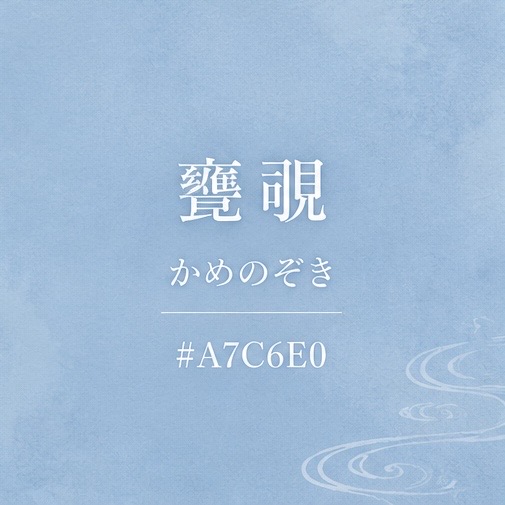
Japan’s traditional colors often reflect the beauty of nature and everyday life.
Kamenozoki (甕覗) is a delicate pale indigo color inspired by Japan’s long history of indigo dyeing. Its gentle tone has been admired for centuries and continues to appear in kimono and traditional crafts today.
What Is Kamenozoki?
Kamenozoki is a traditional Japanese color with a soft, pale indigo-blue appearance.
Its light and refreshing tone resembles a clear sky or calm water, creating a sense of purity and tranquility.
It is considered one of the most elegant shades within Japan’s traditional indigo color palette.
Why Is It Called Kamenozoki?
The name Kamenozoki has a unique origin.
A kame is a large earthenware vat traditionally used for indigo dyeing.
Nozoki means “to peek into.”
According to tradition, the color resembles the pale blue seen when looking into an indigo dye vat, giving the color its poetic name.
Kamenozoki in Japanese Culture
Kamenozoki has long been appreciated for its calm and understated beauty.
Rather than standing out with bold colors, it reflects an important aspect of Japanese aesthetics—finding elegance in simplicity and subtlety.
The color has been used in kimono, textiles, and traditional crafts for generations.
Kamenozoki and Kimono
Today, kimono inspired by Kamenozoki remain popular because of their fresh and graceful appearance.
Its pale indigo tone is especially suitable for spring and summer, bringing a feeling of lightness and serenity.
The color pairs beautifully with floral and seasonal motifs while maintaining a timeless elegance.
Conclusion
Kamenozoki is more than a beautiful pale blue.
It represents Japan’s rich indigo-dyeing tradition and the appreciation of quiet, natural beauty.
Learning about colors like Kamenozoki helps us understand that kimono are not simply garments, but expressions of Japanese culture, craftsmanship, and history.
Related Articles
- Kimono Symbolism: Butterfly and Hemp Leaf Pattern Meanings
- What Is an Obi? A Simple Guide to the Kimono Belt
- Kimono Fabrics: What Are Kimono Made Of?
- Can Anyone Wear a Kimono? A Simple Cultural Guide
- Kimono Seasonal Motifs: Cherry Blossoms and Maple Leaves Meaning
- Kimono Colors Meaning: What Do Colors Represent in Kimono?
- What Is Tsumugi?
Explore the Grandmother’s Kimono Archive
Learn more About alo
コメント