Introduction
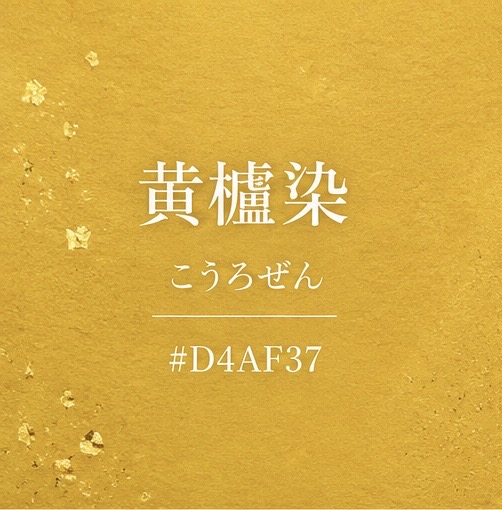
Among Japan’s traditional colors, Kōrozen (黄櫨染) holds a truly unique place.
For more than a thousand years, it has been reserved exclusively for the Emperor during important ceremonies. Beyond its historical significance, Kōrozen is admired for its remarkable ability to change its appearance when touched by light.
What Is Kōrozen?
Kōrozen is a traditional Japanese color with a rich golden-brown tone and subtle reddish hues.
Since the reign of Emperor Saga during the Heian period, it has been designated as the ceremonial color worn only by the Emperor, making it one of Japan’s most prestigious traditional colors.
Even today, Kōrozen continues to appear in important Imperial ceremonies.
Why Was It Reserved Only for the Emperor?
In ancient Japan, clothing colors were regulated according to social rank.
These colors were known as Kinjiki (Forbidden Colors).
Among them, Kōrozen held the highest status and was reserved exclusively for the Emperor during official ceremonies.
Because no one else was permitted to wear it, Kōrozen became known as the Imperial Forbidden Color.
A Color That Changes with Sunlight
One of Kōrozen’s most fascinating characteristics is the way its appearance changes in different lighting.
In softer light or shade, it appears as a calm golden-brown color.
When sunlight shines on the fabric, however, warm reddish and golden tones become more visible, giving the color a radiant and almost glowing appearance.
Because of this remarkable transformation, Kōrozen is often associated with the brilliance of the sun.
Traditional natural dyeing techniques also create subtle variations, making every piece slightly different and adding to its timeless beauty.
Kōrozen in Japanese Culture Today
Kōrozen continues to be used for important Imperial ceremonial robes in modern Japan.
Its continued use reflects the country’s deep respect for history, craftsmanship, and centuries-old traditions.
More than simply a color, Kōrozen represents Japan’s cultural heritage and the enduring symbolism of the Imperial household.
Conclusion
Kōrozen is much more than a beautiful traditional Japanese color.
It represents Imperial tradition, exceptional craftsmanship, and a unique beauty that changes with the light.
Learning about colors like Kōrozen reminds us that kimono are not simply garments—they are living expressions of Japan’s history, culture, and artistic heritage.
Related Articles
- Kimono Symbolism: Butterfly and Hemp Leaf Pattern Meanings
- What Is an Obi? A Simple Guide to the Kimono Belt
- Kimono Fabrics: What Are Kimono Made Of?
- Can Anyone Wear a Kimono? A Simple Cultural Guide
- Kimono Seasonal Motifs: Cherry Blossoms and Maple Leaves Meaning
- Kimono Colors Meaning: What Do Colors Represent in Kimono?
- What Is Tsumugi?
Explore the Grandmother’s Kimono Archive
Learn more About alo
コメント