Introduction
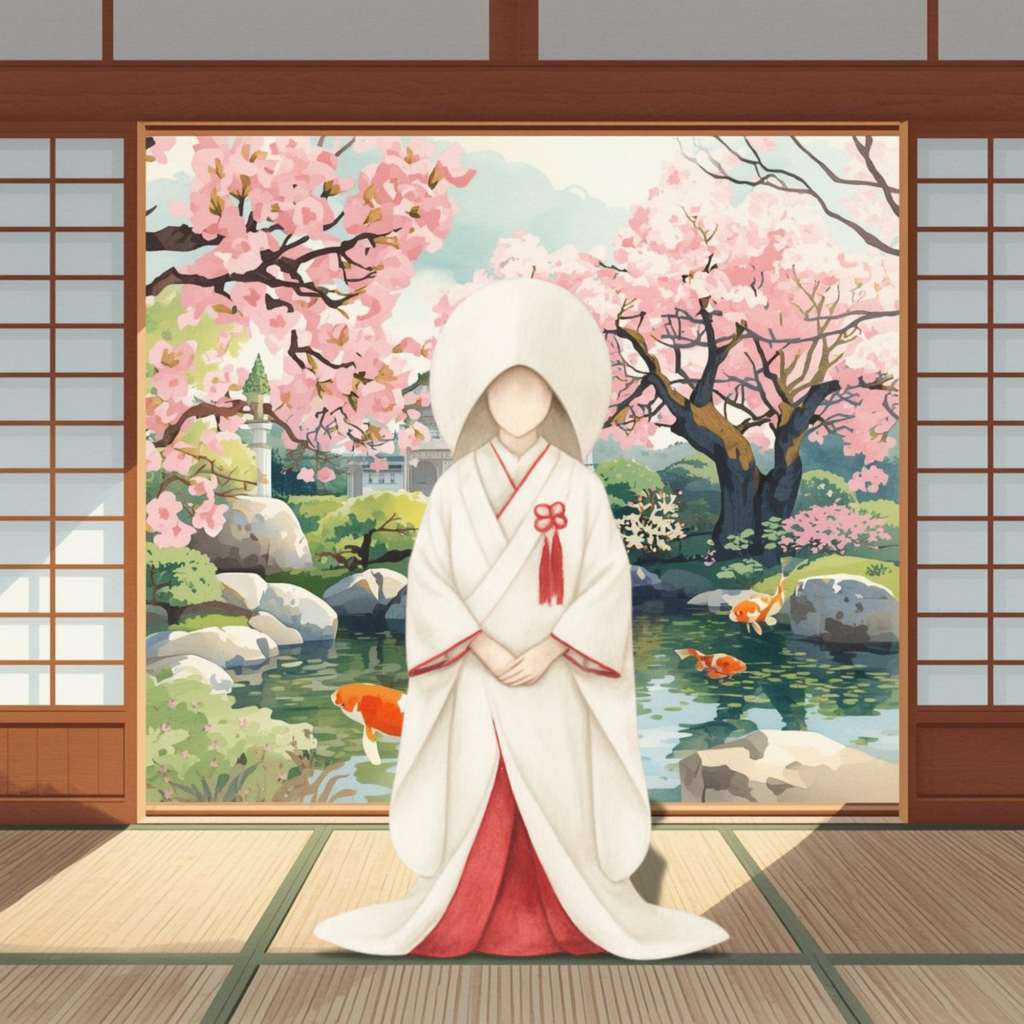
White in kimono represents purity and simplicity.
It may seem minimal,
but it carries deep cultural meaning and elegance.
What You’ll Learn
- The meaning of white
- Its role in kimono
- Its impression
- Modern styling
The Meaning of White
White symbolizes:
- Purity
- Cleanliness
- New beginnings
- Spiritual clarity
It represents a blank state,
ready to take on new meaning.
The Role of White in Kimono
A Highly Formal Color
White is used in important occasions such as:
- Weddings (Shiromuku)
- Ceremonies
- Ritual events
A Color That Enhances Others
White highlights other colors beautifully.
It creates harmony and balance in styling.
Impression of White
- Clean and pure
- Calm and quiet
- Elegant and refined
A color of “minimal beauty”
Styling Tips
Focus on Texture
Since white shows detail clearly,
fabric quality is very important.
Balance with Other Colors
- Gold → luxury
- Black → contrast
- Soft colors → gentle look
Modern Styling
White is popular for:
- Minimal styling
- Artistic looks
- Photography and fashion
Conclusion
White is not just a color—
it represents space, balance, and purity.
Its quiet strength makes it timeless and powerful.
Next Reading
- What Does Pink Mean in Kimono?
- What Does Purple Mean in Kimono?
- What Does Green Mean in Kimono?
- What Does Gold Mean in Kimono?
- What Does Black Mean in Kimono?
- What Does Indigo Blue Mean in Kimono?
- What Does Orange Mean in Kimono?
Discover the meaning of kimono colors in Japanese culture—from white and black to pink, indigo, gold, and more—each carrying its own symbolism.
alo also creates kimono-inspired dachshund apparel connected to Japanese culture, family stories, and quiet everyday style.
Featured design inspired by traditional Japanese kimono elegance
A design that blends Japanese tradition with a modern, playful spirit.
Explore
Explore real kimono from my grandmother’s collection:
→ Grandmother’s Kimono Archive
Learn more about alo:
→ About alo
コメント