
Introduction
Nature has always played an important role in Japanese culture.
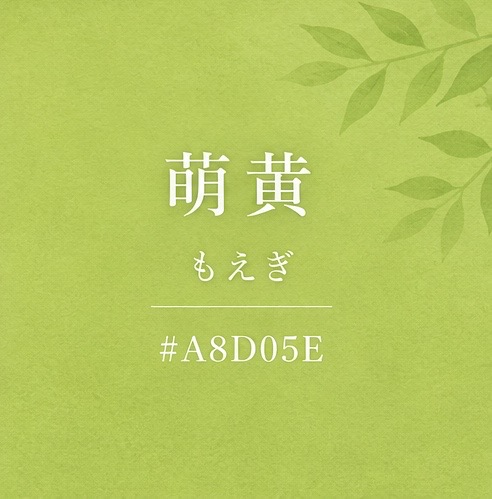
Among Japan’s traditional colors, Moegi (萌黄) represents the fresh green of newly sprouting leaves. It symbolizes spring, new beginnings, and the quiet beauty of nature that has inspired Japanese art and kimono for centuries.
What Is Moegi?
Moegi is a traditional Japanese color known for its bright yellowish-green tone.
Its name comes from the Japanese word “moeru” (萌える), meaning “to sprout” or “to bud.”
Inspired by the first leaves of spring, Moegi has long been associated with vitality, growth, and renewal.
The Meaning Behind Moegi
In Japanese culture, colors often express the changing seasons.
Moegi represents the arrival of spring and the energy of new life.
Rather than being simply green, it reflects Japan’s appreciation for the subtle beauty found in nature’s seasonal changes.
Moegi in Japanese Culture
For centuries, Moegi has appeared in kimono, textiles, and traditional crafts.
Its gentle yet vibrant tone has made it a popular color for expressing freshness and harmony with nature.
The color reflects an important aspect of Japanese aesthetics—the idea that beauty can be found in quiet, everyday moments.
Moegi and Kimono
Today, kimono inspired by Moegi remain popular, especially during spring.
The soft green tone pairs beautifully with floral and seasonal motifs, creating an elegant look that celebrates nature.
It is a timeless color that continues to represent hope, growth, and the changing seasons.
Conclusion
Moegi is more than a traditional Japanese color.
It symbolizes new beginnings, the beauty of spring, and Japan’s deep connection with nature.
Learning about colors like Moegi helps us understand that kimono are not only garments but also expressions of Japan’s culture, seasons, and artistic traditions.
Related Articles
- Kimono Symbolism: Butterfly and Hemp Leaf Pattern Meanings
- What Is an Obi? A Simple Guide to the Kimono Belt
- Kimono Fabrics: What Are Kimono Made Of?
- Can Anyone Wear a Kimono? A Simple Cultural Guide
- Kimono Seasonal Motifs: Cherry Blossoms and Maple Leaves Meaning
- Kimono Colors Meaning: What Do Colors Represent in Kimono?
- What Is Tsumugi?
Explore the Grandmother’s Kimono Archive
Learn more About alo

コメント