Introduction
Japan’s traditional colors are deeply connected to nature, history, and craftsmanship.
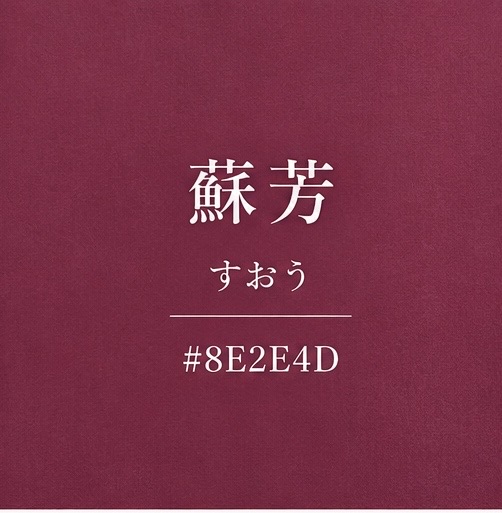
Among them, Suō (蘇芳) is a graceful red-purple color created from natural plant dyes. For centuries, it has been admired for its refined beauty and has played an important role in Japanese clothing and textile traditions.
What Is Suō?
Suō is a traditional Japanese color known for its rich red-purple tone.
Its name comes from the sappanwood tree, whose heartwood has long been used to produce natural dye. The result is a warm, elegant color that reflects the beauty of traditional Japanese craftsmanship.
How Is Suō Created?
Traditionally, Suō is produced using natural dye extracted from sappanwood.
Because it is created from natural materials, the exact shade can vary depending on the dyeing process, the fabric, and the surrounding environment.
These subtle differences are part of what makes naturally dyed textiles so unique and beautiful.
Suō in Japanese Culture
For centuries, Suō has been associated with elegance and refinement.
It appeared in the clothing of the aristocracy and later became popular in traditional textiles and crafts.
Rather than being bright or flashy, Suō expresses quiet sophistication—a quality highly valued in Japanese aesthetics.
Suō and Kimono
Today, kimono inspired by Suō continue to be appreciated for their timeless beauty.
Its gentle red-purple tone creates a graceful appearance that suits a wide range of seasons and occasions.
The color pairs naturally with traditional patterns and reflects the calm elegance often found in Japanese design.
Conclusion
Suō is more than a beautiful traditional Japanese color.
It represents centuries of natural dyeing techniques, craftsmanship, and cultural heritage.
Learning about colors like Suō helps us appreciate that kimono are not simply garments, but expressions of Japan’s history, artistry, and respect for nature.
Related Articles
- Kimono Symbolism: Butterfly and Hemp Leaf Pattern Meanings
- What Is an Obi? A Simple Guide to the Kimono Belt
- Kimono Fabrics: What Are Kimono Made Of?
- Can Anyone Wear a Kimono? A Simple Cultural Guide
- Kimono Seasonal Motifs: Cherry Blossoms and Maple Leaves Meaning
- Kimono Colors Meaning: What Do Colors Represent in Kimono?
- What Is Tsumugi?
Explore the Grandmother’s Kimono Archive
Learn more About alo

コメント